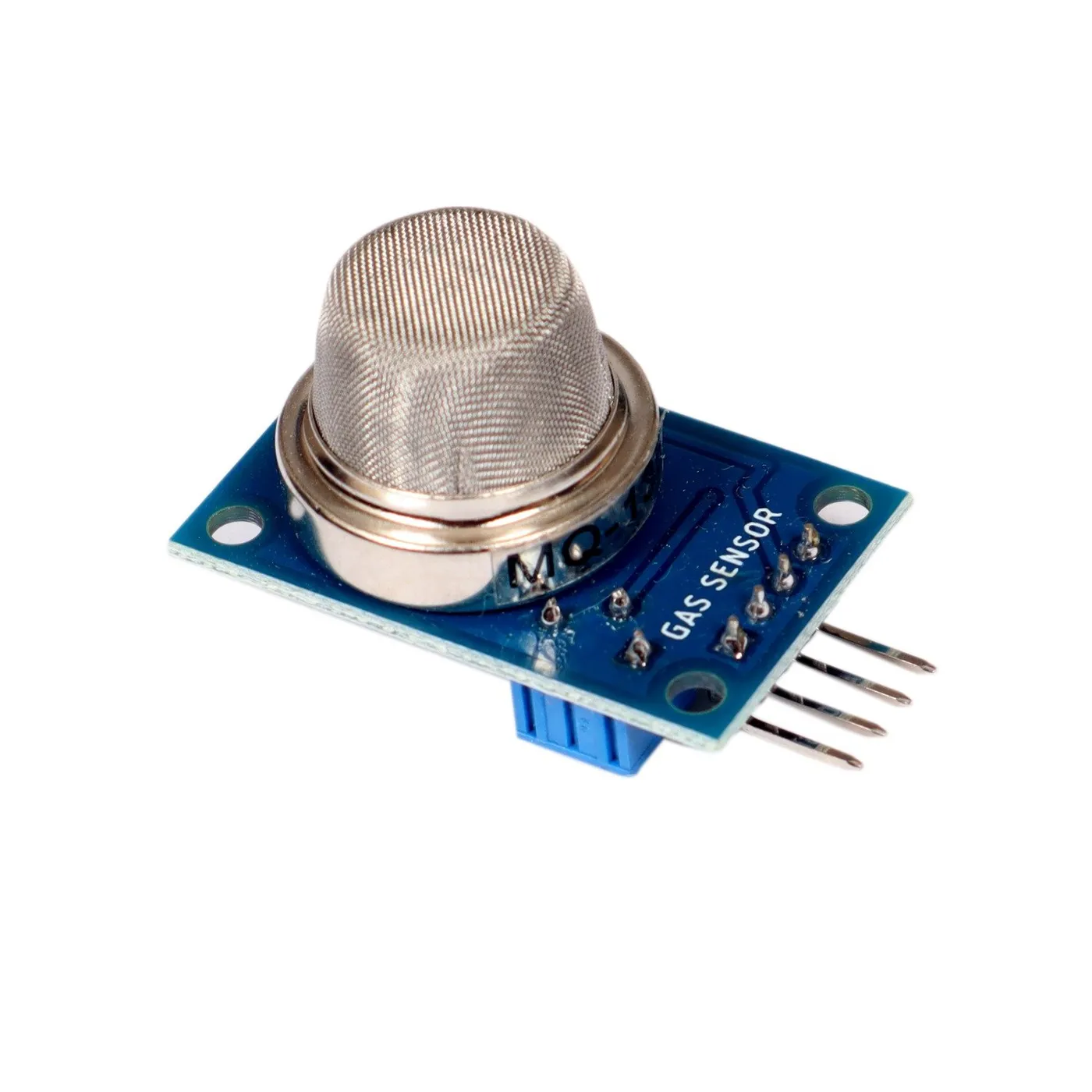
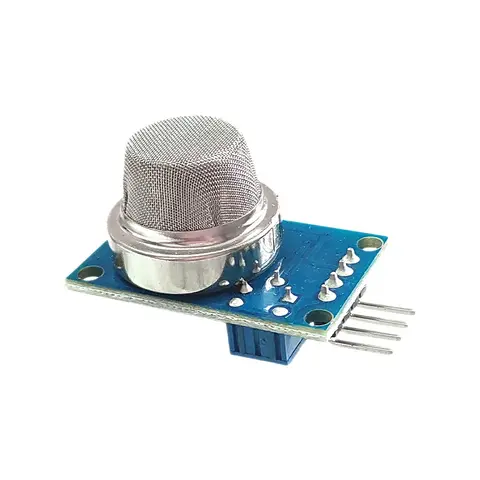
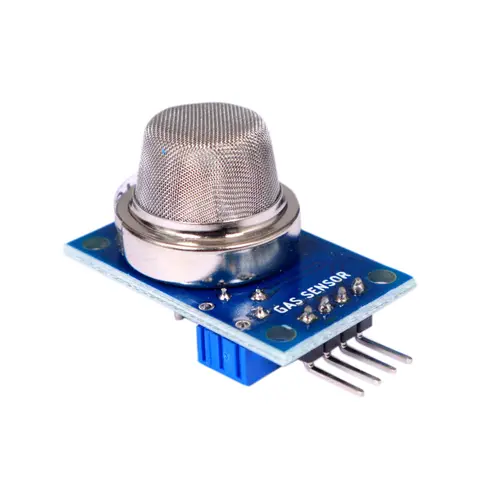
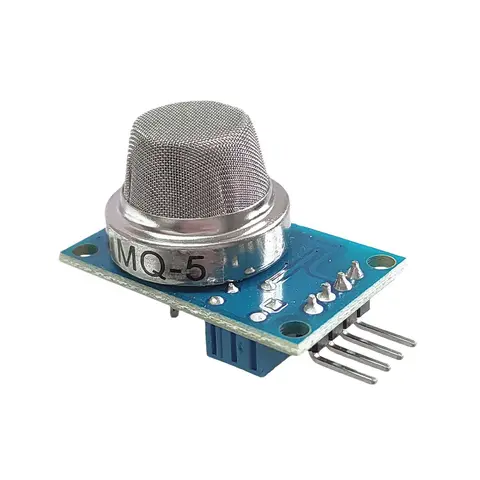
MQ135 Gas Sensor Module is made using Air Quality Gas Sensor MQ135. It is a low-cost semiconductor sensor and has high sensitivity to ammonia gas, sulphide, benzene series steam, also can monitor smoke and other toxic gases well. It is a Metal Oxide Semiconductor (MOS) type Gas Sensor also known as Chemin resistors as the detection is based upon change of resistance of the sensing material when the Gas comes in contact with the material. Using a simple voltage divider network, concentrations of gas can be detected. This module provides both digital and analog outputs. It can be easily interfaced with Microcontrollers, Arduino Boards, Raspberry Pi etc.
MQ-135 Gas sensor can detect gases like Ammonia (NH3), sulfur (S), Benzene (C6H6), CO2, and other harmful gases and smoke. Similar to other MQ series gas sensor, this sensor also has a digital and analog output pin. When the level of these gases go beyond a threshold limit in the air the digital pin goes high. This threshold value can be set by using the on-board potentiometer. The analog output pin, outputs an analog voltage which can be used to approximate the level of these gases in the atmosphere. The MQ135 air quality sensor module operates at 5V and consumes around 150mA. It requires
some pre-heating before it could actually give accurate results.
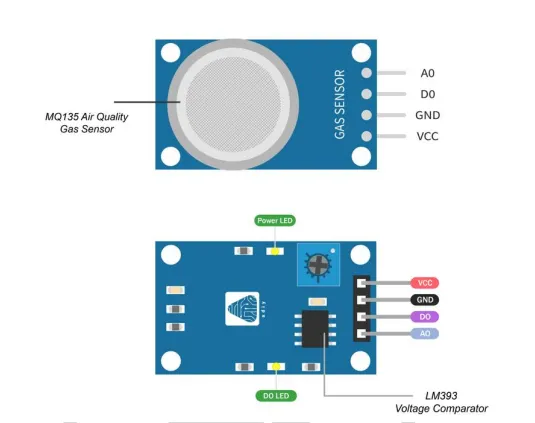
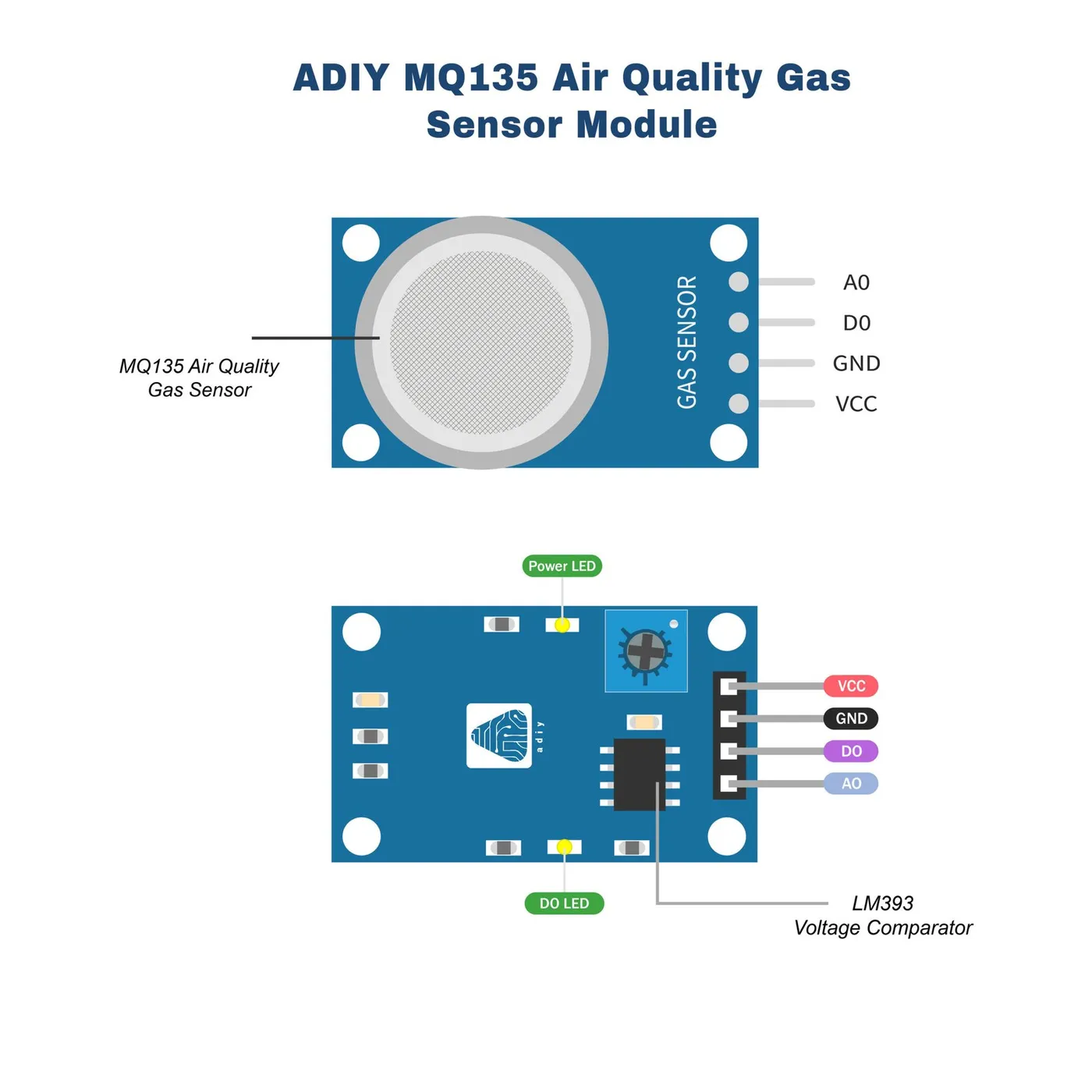
Pin Configuration: MQ-135 Gas sensor Module
Because of the onboard LM393 comparator IC the MQ135 Gas sensor module can also be used without the need of an external microcontroller. Simply power up the module and set the sensitivity of the digital pin using the potentiometer, then when the module detects the gas the
digital pin will go low. This digital pin can directly be used to drive a buzzer or LED with the help of simple transistors. AO: It is analog output Pin. From this pin, you will get analog data. The Analog output pin of the sensor can be used to measure the PPM value of the required gas. To do this we need to use an external microcontroller. The microcontroller will measure the value of analog voltage and perform some calculations to find the value of Rs/Ro where Rs is the
sensor resistance when gas is present and Ro is sensor resistance at clean air.